The Footage Is Not the Problem
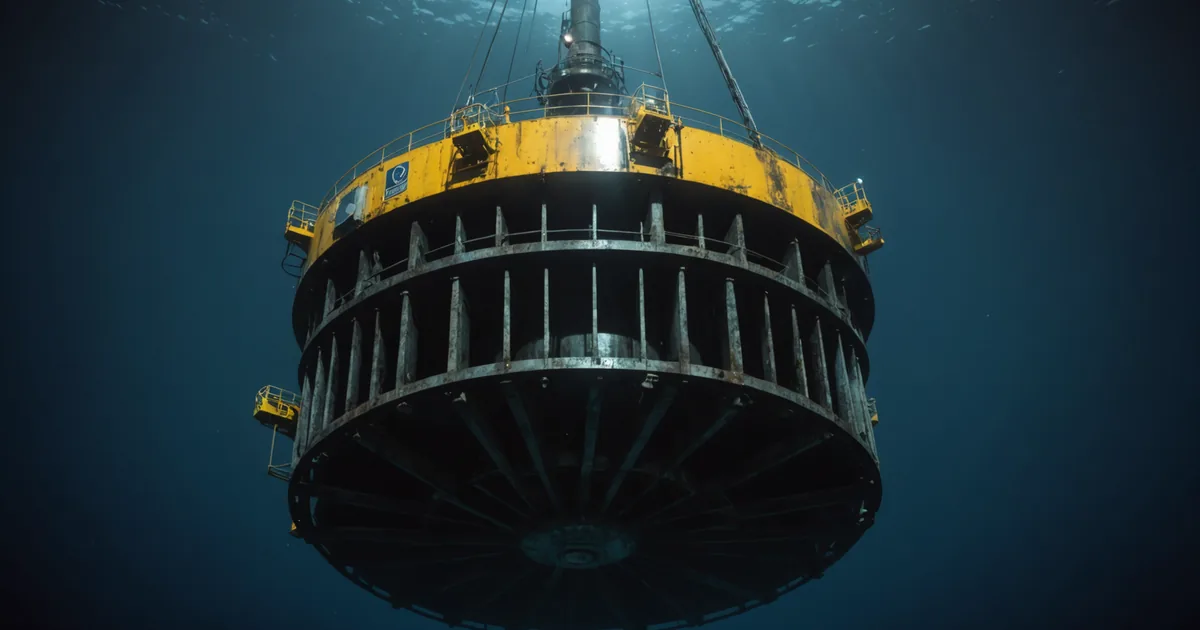
A modern offshore ROV inspection vessel can survey multiple foundations per day in favourable sea states. Footage is transferred off the vessel within hours of completing each dive. By the time the vessel returns to port after a multi-day campaign, the raw survey material is already on an offshore drive or a staging server, timestamped and catalogued.
The inspection report that must accompany that footage as a compliance record takes, on average, four to six weeks to deliver. In programmes we have mapped in detail, the fastest turnaround for a complex multi-structure campaign has been around three weeks. The longest was twelve.
The footage is not the bottleneck. The footage is done. The bottleneck is everything that happens between the footage arriving and the report landing on the asset manager's desk.
Where the Time Goes: A Documentation Chain Breakdown
Walking through the standard documentation assembly chain for a typical 20-foundation offshore wind inspection programme explains where the weeks accumulate.
Video review is the first stage, and it is where most discussions focus. An engineer watches the survey footage, pauses on areas of interest, captures still frames or timestamps, and notes findings. At typical video review rates of roughly one to two hours of footage per engineer-hour of review time (accounting for replay, frame capture, and notation), an 8-hour footage set from a single foundation takes two to four engineer-hours to review. Across 20 foundations, that is 40 to 80 engineer-hours of dedicated video review time, which translates to one to two weeks of full-time engineering effort.
Finding categorisation follows. Raw review notes must be translated into a finding inventory using the classification vocabulary required by the relevant regulatory framework. Finding descriptions that were adequate as field notes ("some corrosion near weld on northwest face, frame 1847") must be rewritten into the structured format the compliance report requires, with severity categories, location codes, and cross-references to photographic evidence.
The photo log is a separate documentation task. Stills captured during review must be extracted, labelled, cross-referenced to the finding inventory, and formatted for the report appendix. On a 20-foundation survey, this can easily involve 200 to 400 individual images requiring cataloguing.
Report drafting itself is a distinct stage. The body of the compliance report must be written against a template that satisfies MCA or HSE structural integrity reporting requirements. For large campaigns this is not a simple template fill; the engineer writing the report must interpret aggregate findings, assign condition ratings at the structure and array level, and draft the compliance statement sections in language that the receiving authority will accept.
Review and sign-off closes the chain. Most operators require internal quality review of the draft report before it goes to the classification surveyor. Some classification societies require a review pass of their own before the report can be submitted to the MCA or HSE. Each review pass adds one to two weeks of elapsed time, even when the reviewer is prompt.
Why This Is a Documentation Assembly Problem, Not an Analysis Problem
The engineering analysis in a subsea inspection report is genuinely important but rarely the time-limiting factor. An experienced inspection engineer can assess the significance of the findings from a 20-foundation survey and draft condition judgments for each structure in a focused two to three day effort, once the finding inventory is in front of them.
What takes the time is assembling the underlying inventory. Watching the video, capturing the frames, categorising the findings, building the photo log: these are not complex analytical tasks, but they are highly labour-intensive ones. They require focused attention, they cannot be parallelised easily, and they consume the time of engineers whose day rates reflect analytical expertise they are not fully deploying during video playback and image cataloguing.
The documentation assembly bottleneck is not unique to offshore wind. It appears in any inspection discipline where the primary evidence source is video footage: subsea pipelines, marine renewable energy devices, harbour structures, and offshore oil and gas platforms all face versions of this same workflow problem. The inspection capture technology has become very efficient; the post-survey documentation process has not kept pace.
What Automation Changes About This Chain
Automated anomaly detection addresses the video review and finding categorisation stages, which are the most time-intensive parts of the documentation chain. When the footage has been processed and an anomaly inventory is returned as a structured output, the remaining documentation tasks are substantially compressed.
The engineer reviewing an automated anomaly report is working with a pre-built finding inventory that already has location codes, severity classifications, and frame references attached to each finding. The review task shifts from discovery (watching hours of footage to find what might be there) to verification and interpretation (confirming that the flagged findings are correctly classified and that no significant findings were missed, then applying engineering judgment to assess their collective significance). This is a qualitatively faster process, and it is also a better use of engineering expertise.
In our early-access programme, operators with 8-hour single-foundation survey datasets have moved from video review completion to a ready-for-report finding inventory in under 18 hours rather than the two to four engineer-days typical of manual review. The remaining documentation time, covering photo log assembly, report drafting, and the review-sign-off cycle, is unchanged by automation. But removing the video review bottleneck from the critical path brings the total delivery time from weeks to days for most single-foundation surveys.
We are not claiming that automated processing eliminates the engineer's role. The compliance report cannot be generated without engineering sign-off, and the classification surveyor review step is a regulatory requirement that no software layer bypasses. What automation does is shift the engineer's effort away from footage watching and toward the judgment tasks that cannot be automated.
Organisational Constraints That Persist
Some delays in the inspection-to-report chain are not addressable by improving the documentation workflow. The most common non-workflow constraint is engineer availability: the inspection engineer who was offshore running the survey is not also available to review the footage immediately upon return. If the same person is expected to watch the footage, categorise findings, and write the report, and they are already committed to the next campaign or to other asset management work, the report waits regardless of how efficient the documentation tools are.
Review and sign-off calendar bottlenecks are similarly outside the workflow. Classification society review passes are scheduled in advance, and their throughput constrains all operators whose reports are waiting for that review simultaneously.
The documentation assembly bottleneck is a genuine and addressable part of the problem, but it sits alongside these structural constraints. The realistic expectation for a well-run programme with automated processing is: documentation assembly time down from weeks to days; sign-off and review cycle unchanged; overall delivery time reduced by removing the assembly bottleneck from the critical path. For most operators, that alone is a significant improvement in programme throughput and reporting predictability.